

FUT or Strip Harvest Technique
Strip Harvest Technique
FUT or Strip Harvest Technique
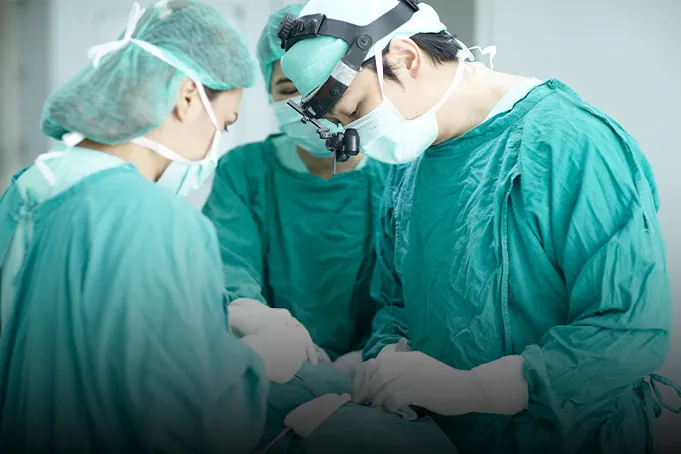
is a standard hair transplant technique that hasbeen preferred by physicians throughout the world. It is a method of hairtransplant conducted by stripping scalp skinat the back of the head where strongest follicular units are, causinglinear scar.
*** The length of such scar is upon the size ofdemanded number of grafts.
Hair transplant procedures
Step 1
An outline is marked by surgeon where the newhairline will be created.
Step 2
The permanent hair zone is selected and the hairis taped so after surgery the wound will be hidden
Step 3
The selected hairs are shaved and the outlineof strip is marked. The donor site is anesthetized and tumescent fluid isinjected to plump up the skin in order to avoid causing damage to nerves,vessels and hair shafts.
Step 4
Open technique donor harvesting is appliedusing 4x prismatic loupes.
Step 5
Donor site is closed by retention suture andsuperficial running stitches. Sutures are typically removed approximately 7-14days after the hair transplant surgery.
Step 5
Donor strip.
Step 7
Piece of donor strip is slivered into thinnerslices.
Step 8
After given local anesthesia, the baldingrecipient area is ready for a hair transplant. Tiny incisions are made in therecipient areas in irregular patterns that mimic nature. The follicular unitgrafts will then be placed carefully into these tiny incisions.
Step 9
Nerve block to numb the transplanted area byinjecting local anesthetics around the main nerve trunk.
Step 10
Follicular unit grafts are gently placed intothe recipient incisions.
Two-hand technique insertion minimizes crushing of grafts.
Stick-and-place technique is applied at the end of procedure to addup the density.
Implanter insertion minimizes crushing of grafts.
Pre-Operative Instructions
Pre-Operative Instructions for Hair Transplantation
Four week before surgery
Perform the Scalp Stretching Exercise Maintain an adequate length of hair (about one inch) on the back of your head. Your donor grafts will be removed from here and you should expect coverage following your procedure.
Please inform the doctor regarding drug allergy.
Two weeks before surgery
No Rogaine or Minoxidil.
One week before surgery
No Plavix, Aspirin (acetylsalicylic acid – A.S.A.) or anti-inflammatory medications that contain Aspirin.
No Vitamin E, Fish oil.
No Ginkgo Biloba, Ginseng or other herbal supplements.
Continue your regular medicines unless the doctor told you to stop taking them.
If you have high blood pressure and taking medication please inform your doctor not to use Beta blocker for one week prior to surgery and switch to other drug.
Please notify the doctor in case of fever or sickness or other surgery you will have prior to surgery.
One day before surgery
No Alcohol and stop smoking
Make arrangements for someone to take you to and from the clinic because you have to take oral sedation in addition to local anesthetics.
Confirm your appointment
Consultation or pick up antiseptic shampoo and pre op antibiotics at the clinic
Clear the payment
If you color your hair on the regular basis, please do so a few days prior to surgery because you should not color your hair post operative at least 1 month
On surgery day
Wash your hair in the morning using given antiseptic shampoo at least 5 minutes (antiseptic hand wash can be substituted for Betadine scrub and Hibitane scrub)
Wear a button-down shirt and comfortable pants. You should also bring an adjustable baseball cap or scarf along with you.
Do not wear anything that will have to be pulled tightly over your head and for a few days after surgery.
No tight hats or caps.
You may have light breakfast, but do not drink tea and coffee Take antibiotic 2 capsules after meal as doctor prescribed one hour before coming to clinic. If you are not prescribed, you may take it at the clinic.
Please report to the clinic on time.
Do not drive to the clinic on the day of surgery.
Do not bring valuable things with you to the clinic
You’re required to have the blood test for anti HIV (rapid test from finger tip at the clinic) Due to our policy, we apology for our cancellation, We have to cancel all case of contagious patients.
Scalp Stretching Exercises
It is extremely important to stretch, and loosen, your scalp as much as possible prior to hair transplant. In order to accomplish “scalp stretching,” you should perform the following maneuver.
Grasp your lower scalp by the hair near the lower hairline, and pull upward as firmly as possible, with the heel of your palm. (Figure 1)
Hold it as tightly upward as you can (maximum elevation) for 10 seconds, then relax for 10 seconds. Repeat over and over.
Divide your efforts between the lateral (side) (Figure 2) and posterior (back) aspects of your scalp for a minimum of 30 minutes per day for at least 30 days prior to your surgery.
Properly performed, your results will be both pleasing and surprising! Your scalp should loosen considerably during this 30-day period.
Post operative medications
An antibiotic will be given to help prevent infection, take them until finished.
Pain killers: You may take two tablets every 4-6 hrs or only if needed.
Do not take aspirin for 3 days after surgery (except if the doctor approves the intake of this drug) as it can thin the blood and cause bleeding.
Postures
Do not bend over but rather lower your body to pick up things for the first 5 days to prevent facial swelling. Be careful when you get inside the car. Make sure your head does not hit the roof.
Diet
Do not over eat food because this may cause stomach upset especially with the drugs you’re receiving during surgery. No Food restriction. Do not drink alcohol for 48 hours after the surgery. Alcohol thins the blood and may cause bleeding.
Sleeping
Keep the head elevated with two pillows and use a towel roll under your neck to help relieve the pain.
Shampooing and wound
Transplanted Area Your hair will be washed 24-48 hours after surgery. We want the grafts to adhere solidly during this time.
Wet your head with a bowl of room temperature water or with a gentle stream of water from the shower. If you use the shower block the stream with your hand so that the water pressure is not too strong.
Lather up shampoo on the palm of your hands.
Pat this shampoo on the area gently (DO NOT RUB) and let it sit for 1-2 minutes.
Gently rinse off with a bowl of water or a gentle stream of water from the shower.
Pat dry gently with towel. After 24 hours you can use a blow drier on cool setting only. DO NOT RUB THE GRAFTS TO DRY THEM.
Do this twice a day starting 24 or 48 hours after surgery.
After 7 days you can begin to lightly rub the grafted area to help remove crust.
After 14 days you should be able to shower normally.
Use our good quality shampoo for washing.
You can repeat the process with a conditioner to help break down crusting.
Donor Area You can be more aggressive with the sutured area. Wash this daily starting 24-48 hoursafter surgery. However be careful of the knots which are located at each end of the incision
Nausea, Vomit
This may occur in less than 10% of patients after surgery. This is due to the medication given during surgery. Don’t panic because this condition is self limited and the doctor will give you medication for this. For intractable vomiting you may need intravenous fluiding
Hiccups
This may occur occasionally and may last for 24 hours. Drink plenty of water at one time. Don’t worry this condition is self limited.
Bleeding
On occasion slight bleeding may occur from either the graft site or donor site. If this occurs, apply gentle but firm pressure to the area with the gauze provided or a clean cloth. APPLY THE PRESSURE FOR A FULL 5 MINUTES. The bleeding should stop. If it does not, please call us.
Facial Swelling
On occasion swelling may occur in 3% of patients. However currently we have incorporated anti-swelling medication in the local anesthetic that we use which is why most patients don’t usually experience swelling but if it does occur it is very minimal. It is not dangerous and is painless and will not affect the growth of the graft. Using ice on the forehead after surgery for 10 minutes 4 times a day will further decrease your chance of swelling. DO NOT APPLY ICE DIRECTLY TO THE GRAFT SITE AS THIS MAY DAMAGE THEM. APPLY THE ICE TO THE FOREHEAD BELOW THE GRAFTS.
Scabs or crusts
Small crusts may form on each graft, and these can usually be camouflaged by any existing hair that can be combed over the recipient area, or with camouflage products such as Toppik. These crusts will flake-off by 5–14 days after the surgery. Alovera gel given to you will accelerate scab falling by applying twice a day before showering. Do not pick at the scabs; let it fall off by itself.
Folliculitis over the transplanted area
On occasion a patient may develop a folliculitis at the graft site, these look similar to acne with pimple like lesions. If this happens apply moist warm soaks for 15 minutes and antibiotic ointment to the areas 3 times a day. PLEASE NOTIFY US IF THIS OCCURS AS WE LIKE TO PRESCRIBE SPECIFIC MEDICATION FOR THIS PROBLEM.
Elastic Head Band
It should not be removed in the first 48 hrs except when you shampoo and unless the doctor will tell you to do so. Continue to wear it a few more days for a minimum of 2-3 days post-op
Donor stitches
If you have absorbable stitches, there is no need to have them removed. It may take up to 3-4 weeks for the absorbable stitches to be dissolved. Non absorbable retention stitches should be removed in 5-7 days after the surgery. Your doctor will inform you after the surgery which type of stitches you have.
Exercise and Activities
No exercise should be done for 7 days after the procedure. It could result in increased swelling or lost grafts. After 7 days mild exercise can be resumed and after 10 days normal exercise can be resumed.
Swimming and Sun
You should avoid swimming for at least a few weeks after surgery. Remember there are acids, chlorine and bacteria in pools! After this, swimming is alright. The skin of the grafts is not used to the sun and may burn easily. It is OK to go into the sun but do not sunbathe without some protection for this sensitive skin.
Hair Cut & Dye
We advise not to have the hair cut or colored at least 3-4 weeks after the surgery.
Hair Grooming
Rogaine, Toppik, gel, hair spray and mousse are allowed for grooming 5 days after surgery.
Sauna
No sauna for one month
REMEMBER
The hardest part of hair transplantation is waiting for the hair to grow. The hair transplanted today will not begin to grow for 3-4 months after the procedure. Prior to this the grafts will develop small scabs which will fall off in 7-10 days. The shaft of the hair will shed with these scabs. This is normal, do not panic! The roots remain behind. The new hair shafts will be growing below the skin and reach the surface in 3-4 months. The hair continues to mature and add density for up to 10 months. It will take at least
GRAFT SURVIVAL
After graft is removed from donor area, Graft will be in Ischemic stage which is divided into 2 stages;
First stage : “Warm Ischemia” which the Graft is remaining at physiological temperature. This stage begins when we start to remove the tissue until it is put in the preserving solution (at 0-4 degree Celsius). Hair Follicle will be endangered by the Ischemic stage which affects the Oxygen, nutrition and blood supply for the cell. Hence, theanabolic metabolism is used to increase the level of Lactic and Hydrogen Ion. This will also affect the decrease of ATP (Adenosine Triphosphate) which lessen the energy transferred to the Cell as well as affect the balance of Cell’s acidity. From this action, Potassium will flow off the Cell, instead big volume of Sodium will flow in and the Cell will be swollen. It results the imbalance of Minerals and is dangerous for Cell. Once we cool down the Graft, it will be in cold Ischemic stage.
Second Stage : “Cold Ischemia” is when the Graft is remaining at lower physiological temperature. In this stage, the Ischemia is still remaining but the decrease of temperature will keep the Cell still and uses less energy. The solution used for Graft is effected its survival rate. When there is no oxygen in the Cell, the solution will keep the balance of Minerals between Cell and itself. We can say that the solution helps the Hair Follicle stayed safe until the Transplantation. During the process, the Cell might be, once again, jeopardized. It is called ‘Reperfusion Injury’ which is when blood supply nourishes Hair Follicle another time and Free Radicals might be produced. It could also harm the Cell.
We can control the destruction which might be caused to the Cell. Million Hair Transplant Center designs the Hair Transplantation processes which will protect Hair Follicle. It is called Triple Three Procedures which are;
T – Time We will try to diminish the time when Graft is removed starting from the removal of the tissue until the transplantation stage.
T – Temperature We will control the solution temperature between 0-4 degree Celsius because it might create ice formation if it is below 0 degree Celsius. It can damage the Cell. If it is over 4 degree Celsius, the Graft will be back into the Warm ischemic stage again.
T – Temperature We will control the solution temperature between 0-4 degree Celsius because it might create ice formation if it is below 0 degree Celsius. It can damage the Cell. If it is over 4 degree Celsius, the Graft will be back into the Warm ischemic stage again.
TECHNIC
TECHNIC
Currently, we divide permanent hair transplanttechniques into 2 main techniques (according to bring hair root from posteriorhairline or other areas such as beard, torso) as follows
1.Strip Harvest Technique It is the technique of dissecting strip fromposterior hairline and closing the incision then the strips of hair-bearingtissue will be separated to obtain the desired focilicles by usingstereomicroscope or magnifying Loop. The details of dissection and separationmay be varied for each area. For Million hair, we will do silvering with theobtained tissue before using stereomicroscope for separating follicles out ofthe strip. This process has to be performed by experts in order to protectfollicles from injury and provide high level of survival after transplanting.
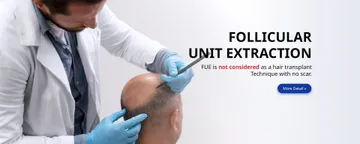
2. FUE (Follicular Unit Extraction Technique) ): Since there are some customers who are afraidof surgery and incision plus with the problem of insufficient experience ofphysician on surgery, this FUE technique was developed.
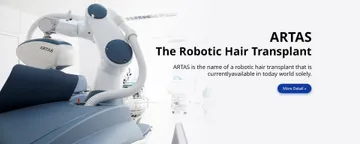
FUE is the tecnique of using an instrument asembling syringe but thetip of this instrument is not sharp with the appearance of small cylinder inthe size from 0.8 mm. to 1.1 mm. The physician will use this instrument toextract individual follicles. Currently, there are several FUE instrumentsavailable in market and new transplant techniques are called according to theirinstruments. Some instruments are able to operate incision and extractiontogether and such instruments are also called FUE. In addition, there is alsothe development of using robot to extract follicles in the future.
Differences of theses two techniques
There is no technique or method with nodisadvantage therefore, customers shall consider pros and cons of such methodor technique before making any decision.
STRIP HARVEST
It is a knid of surgery withdissection and incision.
The incision is closed woundtherefore the possibility of infection is less than 1%.
Donor scar is thin linear.
From the interview, customer mayfeel pain for 1-2 days after surgery. Customers are able to hide the scar bywearing long hair. The posterior hairline may be localizedly shaved for donorsite.
We use high power magnification anda single blade scalpel to carefully excise margins of strip and skilled staffto prepare grafts with microscopes.
It is neccessary to use large amountof experts, approximately 6-8 persons/customer.
ต้องใช้บุคลากรที่มีความชำนาญจำนวนมาก โดยเฉลี่ย 6-8 คน / ผู้รับบริการ 1 คน
The physician should be a surgeonwho is skillful on safety surgery because there are several amount of bloodvessel around our head.
After comparing graft volume withoperation duration, the duration of operation is shorter.
This technique can be performed inlarge volume, for example, ovr than 2500 grafts (Megasession)
FUE (Follicular Unit Extraction Technique)
This technique is microdiscectionwithout any incision.
The incision is open wound that canbe infected easily.
The scar is in the form of a pointwith the approximate size of 1 mm., spreading extensively around posteriorhairline.
From the interview, they feel thepain for the first 2-3 days then the wound turns to be itchy and scabby.
Customer has to shave at the posteriorhairline with the larger size than strip Harvest technique. If it is necessaryto transplant in large area, customer will be suggested to shave all hair.
Grafts are extracted by blindtechnique therefore it is possible to make focilicle injured. In addition, theprocedures of transplanting may cause damage to grafts as well.